Exploring the City of Wonders Dubai’s Tourism Evolution, Urban Development, and Adventure Ecosystem
1. Executive Summary: The City of Wonders as a Strategic Paradigm
In the contemporary landscape of global tourism and urban development, Dubai has transcended its status as a mere commercial hub to establish itself as the definitive “City of Wonders.” This designation is not merely a marketing slogan but a reflection of a deliberate, multi-decade strategic vision driven by the Dubai Department of Economy and Tourism (DET) and the overarching D33 Economic Agenda. As of 2026, the “City of Wonders” brand architecture encapsulates a dualistic development philosophy: the relentless pursuit of architectural superlatives-exemplified by the Burj Khalifa and the Museum of the Future and the meticulous curation of natural and heritage assets, from the Al Fahidi Historical Neighbourhood to the newly inaugurated Al Layan Oasis.
The objective of this report is to provide an exhaustive, expert-level analysis of the City of Wonders. It is designed to serve as a definitive resource for urban planners, investors, luxury travel consultants, and automotive adventure specialists. The analysis dissects the city into its constituent operational sectors: the hyper-modern skyline, the preservation of cultural roots, the booming off-road adventure industry (specifically the dune buggy segment), and the luxury lifestyle economy. By leveraging 2025-2026 visitor data, real estate project updates including the literal “Falcon City of Wonders,” and technical specifications of desert mobility, this document explores the City of Wonders in its entirety.
The data indicates that Dubai’s tourism sector achieved a historic milestone in 2025, welcoming 19.59 million international overnight visitors, a 5% increase year-on-year. This growth trajectory validates the “City of Wonders” tourism strategy, which diversifies the visitor economy beyond luxury retail into sustainable eco-tourism, cultural heritage, and high-octane adventure. The report further examines the semantic landscape of the city, addressing high-intent keywords such as “hidden gems of the city of wonders” and “must-see places,” ensuring a nuanced understanding of what drives global interest in this metropolis.

2. The Urban Canvas: Modern Architecture in the City of Wonders
The visual identity of the City of Wonders is anchored by its skyline, a testament to human ambition and engineering resilience. In 2026, the architectural narrative has shifted from simple verticality to functional innovation, sustainability, and immersive experiences.
2.1 The Vertical Titans: Engineering the City of Wonders Skyline
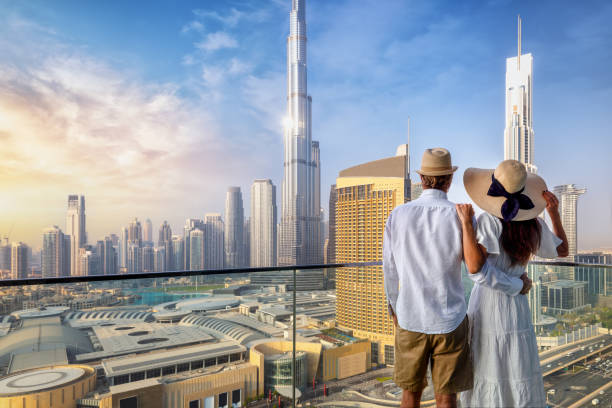
The Burj Khalifa remains the undisputed centerpiece of the city’s vertical ambitions. Standing at 828 meters, it is more than a tourist attraction; it is the axis around which Downtown Dubai revolves. However, by 2026, the visitor experience has evolved significantly. The management has introduced “Prime Hour” access and exclusive VIP lounge experiences at levels 152, 153, and 154, catering to the ultra-luxury segment seeking privacy and unparalleled vistas. These upper decks offer a vantage point that transforms the city below into a shimmering circuit board of light and infrastructure, reinforcing the “City of Wonders” branding through sheer scale.
Comparative Analysis of Architectural Icons:
Landmark | Height / Scale | Strategic Significance | 2026 Operational Update |
Burj Khalifa | 828m | Global icon; anchor of Downtown Dubai. | Enhanced VIP decks (Lvl 152-154); sunset packages. |
Burj Al Arab | 321m | Symbol of ultra-luxury hospitality. | Continued dominance in high-net-worth tourism; underwater suite upgrades. |
Dubai Frame | 150m | Visual bridge between “Old” and “New” Dubai. | Integration with Zabeel Park green corridors; increased footfall. |
Museum of the Future | 77m (Toroidal) | Center for futurism and innovation. | New exhibits on bioengineering, space resources, and ecosystems. |
2.2 The Museum of the Future: Architecture as Narrative
Opened in 2022 and fully matured by 2026, the Museum of the Future represents the intellectual capital of the City of Wonders. Its stainless steel façade, adorned with Arabic calligraphy quoting Sheikh Mohammed bin Rashid Al Maktoum, encapsulates the city’s ambition to be a knowledge hub rather than just a tourist destination. Unlike traditional museums that catalogue the past, this institution acts as an incubator for future technologies. It houses dedicated floors for space resource development, ecosystems, and bioengineering, effectively allowing visitors to “explore the City of Wonders” of 2071 today. The museum’s absence of support columns and its torus shape represent a marvel of parametric design, challenging conventional engineering limitations.
2.3 Urban Exploration and The Dubai Frame
For those interested in “urban exploration city of wonders,” the Dubai Frame offers a critical perspective. Situated in Zabeel Park, it literally frames the city’s contrasting narratives. Looking north, visitors see the historic low-rise structures of Deira and Umm Hurair; looking south, the view is dominated by the modern skyline of Sheikh Zayed Road and Downtown. This duality is essential to understanding the city’s evolution. The structure itself, clad in gold-colored stainless steel, serves as a metaphorical bridge connecting the emirate’s pearl-diving past with its ambitious future.
3. The Falcon City of Wonders: A Master Plan Case Study
No report on this topic would be complete without a dedicated analysis of the Falcon City of Wonders (FCW), a real estate mega-project within Dubailand that literally attempts to bring the “wonders of the world” into a single residential community.
3.1 Concept and Master Plan
Launched in 2005, FCW was conceived as a “World in a City.” The master plan is shaped like a falcon, the UAE’s national emblem when viewed from satellite imagery. The wings of the falcon house residential villas, while the body and head were designated for commercial and entertainment zones featuring life-size replicas of the Seven Wonders of the World.
- The Replicas: The ambitious plan included the Pyramids Park (Giza), the Taj Arabia (Taj Mahal), the Eiffel Tower Dubai, the Leaning Tower of Dubai, and the Great Wall of Dubai.
- Strategic Intent: This project embodies the early 2000s “mega-project” era of Dubai audacious, tourism-centric, and real estate-driven. It aimed to allow residents to “live in history” while enjoying modern amenities.
3.2 Development Status in 2026
The trajectory of FCW has been non-linear, reflecting the broader volatility and maturation of Dubai’s real estate market.
- Residential Success: The residential components, particularly the Western and Eastern Residences, are established, vibrant communities. In 2026, transactions in sub-communities like “Western Residence South” and “Sakura Gardens” show active market movement. Villas in the Western Residence are transacting at approximately AED 7.3 million, while smaller units in Sakura Gardens are priced around AED 1.4 million.
- Sakura Gardens: A significant development in 2026 is the launch of “Sakura Gardens” by HRE Development within FCW. This resort-style community emphasizes Japanese aesthetics and tranquility, signaling a shift from the “theme park” concept to high-quality lifestyle living.
- The “Wonders” Delay: The construction of the monumental replicas has faced significant delays. As of 2026, while the residential zones are populated by over 2,000 families of 50 nationalities, the commercial “theme park” aspect remains largely in planning or partial development stages. This reflects a strategic pivot in Dubai’s real estate market, prioritizing livable communities (schools, clinics, retail) over purely thematic attractions.
3.3 Investment Perspective
For investors exploring the City of Wonders, FCW represents a stable residential asset in the Dubailand corridor. It benefits from proximity to Global Village and major highways like Sheikh Mohammed Bin Zayed Road. The “wonder” value is currently found in its community facilities power stations, sewage treatment plants, and road networks are fully operational rather than the Eiffel Tower replica. The future outlook suggests a revitalization of the commercial “head” of the falcon (Falconcity Mall), potentially finally delivering on the retail promise of the master plan between 2026 and 2030.
4. Historical Anchors: Cultural Landmarks of the City of Wonders
To truly “explore Dubai city of wonders,” one must look beyond the glitter of the skyscrapers to the grit of the Creek. The city’s cultural heritage provides the necessary context for its modern achievements.
4.1 Al Fahidi Historical Neighbourhood
Al Fahidi (formerly Bastakiya) offers a preserved glimpse of mid-19th-century Dubai. The district features traditional wind towers (barjeel) constructed from gypsum, coral, and sandstone, designed to capture the breeze in the pre-electricity era. In 2026, this area has morphed into a cultural hub, hosting the Sikka Art and Design Festival, which blends heritage with contemporary artistic expression.
- Coffee Museum: A hidden gem within Al Fahidi, this museum explores the history of coffee in the region, offering tastings and historical context on the dallah and Bedouin hospitality.
- Coins Museum: Located near the Ruler’s Court, this museum displays over 470 rare coins, highlighting the region’s trade history.
4.2 Al Seef: Bridging Eras
Adjacent to Al Fahidi is Al Seef, a development that mimics traditional architecture but houses modern amenities. This area serves as a transitional zone, allowing tourists to walk from the “old” world of trading dhows to the “new” world of air-conditioned luxury without leaving the waterfront. It is a prime location for “city of wonders photography spots,” offering textures of old plaster and wood against the sleek backdrop of the Creek.
4.3 Traditional Markets: The Sociology of the Souks
The Gold Souk and Spice Souk in Deira remain vital commercial hubs. Unlike the sanitized experience of the Dubai Mall, the souks offer sensory overload and the opportunity for haggling, a cultural practice deeply embedded in the region’s trading history.
- Gold Souk: Home to the world’s largest gold ring (Najmat Taiba), this market reinforces the “City of Gold” moniker. It remains a center for jewelry trade, where the price of gold is fixed but craftsmanship is negotiable.
- Spice Souk: A repository of frankincense, saffron, dried limes, and medicinal herbs. This market connects modern Dubai to its ancient maritime trade routes, offering visitors a tangible scent of the past.
5. The Desert Frontier: City of Wonders Adventure & Ecology
The desert is not merely a backdrop in the City of Wonders; it is an active playground, a conservation zone, and a technical challenge. The search data reveals massive interest in “city of wonders adventure” and “desert safari,” with keyword volumes for “desert safari dubai” exceeding 60,500 monthly searches.
5.1 Technical Terrain Analysis: Lahbab vs. Global Deserts
For off-road enthusiasts and those seeking “self-guided city of wonders exploration” in the dunes, understanding the terrain is crucial. The Lahbab Desert (Red Dunes) offers a specific technical challenge distinct from other global deserts like the Sahara or Namibia.
Comparative Sand Mechanics Table:
Feature | Lahbab (Dubai) | Erg Chebbi (Morocco) | Skeleton Coast (Namibia) |
Sand Composition | High Iron Oxide (Red color); fine silica grain; low moisture. | Fine, orange-hued sand; moderate compaction. | Coastal fog moisture creates denser, heavier sand; salt crusts. |
Dune Structure | Steep slip faces; varying heights (Big Red ~100m). | Star dunes rising up to 150m. | Massive linear dunes dropping directly into the Atlantic. |
Driving Dynamics | Requires high-RPM “floating” technique due to soft, dry sand. | High dunes require momentum; less technical than Lahbab. | High moisture allows for steeper ascents but carries risk of salt-crust traps. |
Vehicle Preference | High-HP Buggies (Can-Am Maverick R) for climbing. | Motorcycles and standard 4x4s. | Heavy-duty 4x4s for endurance and varied terrain. |
The Lahbab desert’s “Big Red” (Al Hamar) is the premier spot for technical dune bashing. The sand here is incredibly soft and aerated, requiring vehicles with high flotation tires and substantial horsepower to prevent sinking.
5.2 The Rise of the Dune Buggy: A Sub-Industry
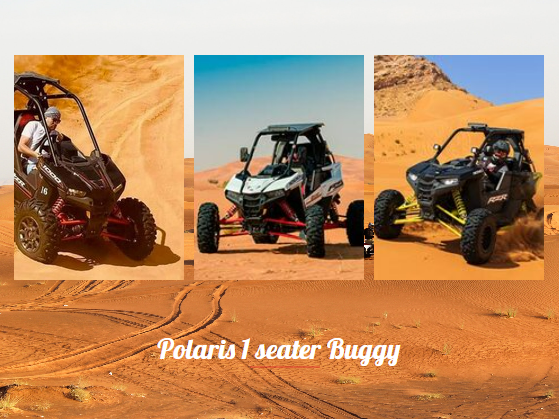
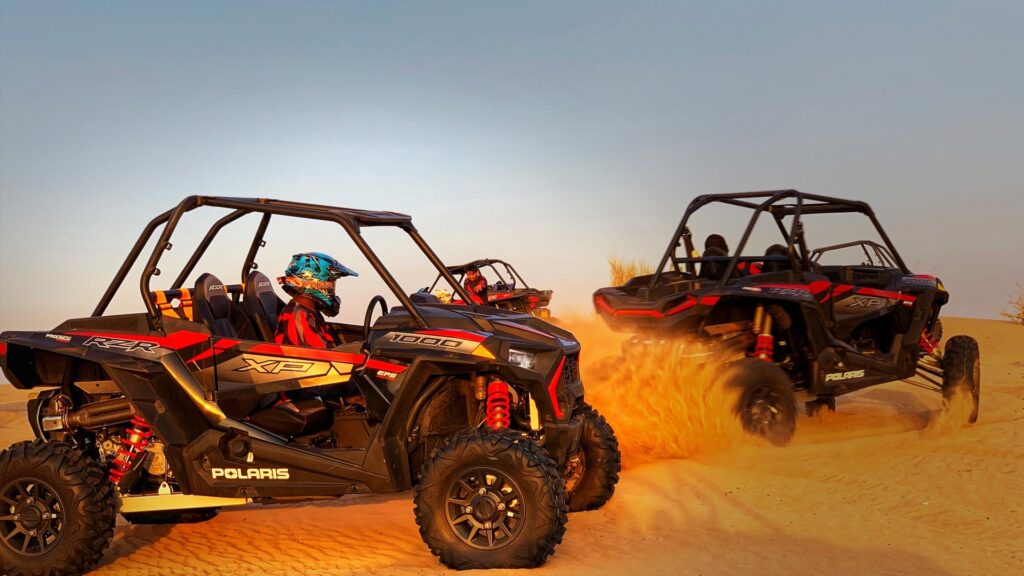
The “dune buggy Dubai” sector has matured into a sophisticated sub-industry. It is no longer just about “renting a car”; it is about accessing elite off-road engineering. Search trends show high volume for specific vehicles like “4 seater dune buggy dubai” and “polaris buggy”.
Vehicle Spotlight: 2026 Can-Am Maverick R
The 2026 Can-Am Maverick R has become the industry standard for high-end operators in Dubai (e.g., ESA Tours, Big Red Adventure Tours).
- Engine: 999cc Turbocharged Triple-cylinder Rotax engine delivering 240 HP.
- Transmission: 7-speed Dual-Clutch Transmission (DCT), allowing for instant gear changes without torque loss crucial for maintaining momentum on soft Lahbab dunes.
- Suspension: Heavy-duty tall knuckle suspension with 25 inches of travel, rivaling dedicated Trophy Trucks used in the Baja 1000.
- Market Positioning: Premium operators utilize these fleets to justify pricing (AED 1000+ per hour), distinguishing themselves from budget operators using older Polaris RZR 1000 models.
5.3 Safety Regulations and Operator Standards (2026)
Safety in the desert is strictly regulated by the Dubai Tourism and Commerce Marketing (DTCM) and Dubai Police to ensure the “City of Wonders” remains a safe destination.
- Licensing: Operators must hold specific adventure tourism licenses.
- Equipment: 4-point harnesses and full roll cages are mandatory. Helmets and goggles must be provided.
- Age Limits: Drivers typically must be 16+ (no civil license required for off-road only) or 18+ depending on the buggy power; passengers can be as young as 5-6.
- Environmental Compliance: Strict “leave no trace” policies are enforced, particularly in the Dubai Desert Conservation Reserve (DDCR).
5.4 The Dubai Desert Conservation Reserve (DDCR)
The DDCR represents the “preservation” aspect of the City of Wonders. Covering 225 square kilometers (5% of Dubai’s land area), it is a sanctuary for the Arabian Oryx and other indigenous wildlife. Unlike Lahbab, access here is restricted to select operators (e.g., Arabian Adventures, Platinum Heritage) who adhere to strict environmental guidelines. Activities here are low-impact: camel treks, wildlife drives, and falconry, ensuring that the natural “Wonder” is not eroded by the “Wonder” of high-powered motorsport.
6. Sustainability as the New Wonder: The Al Layan Oasis
A critical shift in 2026 is the integration of blue and green infrastructure into the urban fabric, redefining what a “desert city” can be. The announcement and development of the Al Layan Oasis, a AED 4 billion project marks a departure from steel and glass towards eco-tourism.
6.1 Project Specifications
- Scale: Spanning 1 million square meters in the Al Marmoom area.
- Hydrology: Features a massive 250,000 square meter man-made lake, created using recycled water systems to ensure sustainability.
- Zones: The oasis is divided into distinct zones:
- Camping Oasis: 100 caravan sites for “luxury camping” and starry nights.
- Gathering Oasis: An open-air cinema, amphitheater, and food truck plaza.
- Recreation Oasis: Trails for running and cycling (14km track).
- Strategic Goal: To attract 330,000 visitors annually, decentralizing tourism away from the coast and into the desert interior in a sustainable manner.
This project complements the “Dubai Can” and “Dubai Reef” initiatives, which focus on reducing single-use plastics and regenerating marine life, further burnishing Dubai’s credentials as a sustainable City of Wonders.
7. Luxury Lifestyle in the City of Wonders
The “City of Wonders” branding leans heavily on the promise of an elevated lifestyle. This is evident in the luxury service sector, which caters to the high-net-worth individual (HNWI) demographic.
7.1 Culinary Excellence: The Michelin Effect
By 2026, Dubai’s culinary scene has fully integrated into the global elite, with the Michelin Guide cementing the city’s status.
- Stars & Trends: Restaurants like Trèsind Studio (Modern Indian) and Ossiano (Underwater Seafood at Atlantis) define the landscape. The trend for 2026 is “deep luxury”, bespoke, intimate dining experiences that go beyond food to include narrative and setting.
- Fusion: The market sees a blend of high-end imports and homegrown concepts (e.g., Orfali Bros) that reflect Dubai’s multicultural fabric.
7.2 Yachting and Maritime Leisure
The coastline offers a counterpoint to the desert. The 2026 yacht charter market is characterized by a demand for “privacy” and “cultural immersion”.
- Key Locations: Dubai Marina and Dubai Harbour.
- Events: The Dubai International Boat Show continues to drive interest, showcasing superyachts that are available for charter.
- Experience: Itineraries now often include cruising to the World Islands or along the canal, integrating the city’s skyline views with maritime luxury. “City of wonders photography spots” are abundant here, particularly at twilight when the skyline illuminates.
7.3 Aerial Perspectives
Exploring the City of Wonders often requires a bird’s-eye view to appreciate its scale. Helicopter tours (departing from Atlantis or Festival City) and hot air balloon rides over the desert (Margham area) are staple luxury experiences. These activities offer a visual confirmation of the city’s “wonder” status showing the Palm Jumeirah’s fronds or the sheer scale of the desert vs. city interface.
8. Events & Seasonality: Best Time to Explore the City of Wonders
Dubai is a seasonal destination, and understanding the calendar is crucial for the optimal experience.
8.1 The Winter Season (October to March)
This is the prime time to explore. Temperatures range from 20°C to 30°C, making outdoor activities like desert safaris, walking tours in Al Fahidi, and beach days pleasant.
- Major Events:
- Liwa International Festival (Moreeb Dune): Held in December/January, this is the pinnacle of desert motorsport. It features drag races up the 50-degree slip face of the Moreeb Dune, car stunt championships, and classic car exhibitions. It is a “must-see place” for automotive enthusiasts.
- Dubai Shopping Festival (DSF): A city-wide retail celebration with fireworks, concerts, and massive discounts.
8.2 Ramadan in the City of Wonders (2026)
In 2026, Ramadan is expected to begin around mid-February.
- Cultural Experience: This is a time of spiritual reflection. Tourists can experience Iftar (breaking of the fast) and Suhoor in grand tents or at local mosques.
- Operational Changes: While eating and drinking in public during daylight hours was historically banned, rules have relaxed significantly for tourists in recent years. However, respect is paramount. Desert safaris often shift timings (afternoon pickup around 3:00 PM) and may suspend entertainment (belly dancing) during the Holy Month.
8.3 The Shoulder and Summer Seasons
- Summer (June-September): Temperatures soar above 40°C. Tourism shifts indoors to “modern architecture city of wonders” sites: the malls, museums, and indoor theme parks (IMG Worlds, Warner Bros. World in Abu Dhabi).
9. Urban Exploration & Hidden Gems
For the returning visitor or the traveler seeking “hidden gems of the city of wonders,” Dubai offers layers beyond the obvious.
9.1 Alserkal Avenue
Located in the industrial Al Quoz district, Alserkal Avenue is the city’s arts district. Warehouses have been converted into contemporary art galleries, independent cinemas (Cinema Akil), and artisanal coffee roasteries. It stands in stark contrast to the glitz of Downtown.
9.2 Fossil Rock (Jebel Maleihah)
Located near the Sharjah border, Fossil Rock is a geological wonder. It is a limestone mountain rich in marine fossils from millions of years ago when the region was underwater. It is a prime spot for “urban exploration” outside the city limits, offering deep desert silence, star-gazing opportunities, and technical driving terrain.
9.3 Al Qudra Lakes (Love Lake)
A man-made series of lakes in the middle of the Seih Al Salam desert. It is a haven for migratory birds and offers a surreal juxtaposition of water and dunes. It is a top “city of wonders photography spot”.
9.4 Ras Al Khor Wildlife Sanctuary
Situated at the end of Dubai Creek, this sanctuary hosts thousands of flamingos. The viewing hides offer a unique photo opportunity: pink flamingos in the foreground with the towering Burj Khalifa in the background—nature and the city in one frame.
10. Curated Itineraries: Navigating the City of Wonders
To effectively “Explore the City of Wonders,” structured itineraries are essential given the city’s sprawl.
10.1 The “Essentials” (1-Day Express)
- Morning: Visit the Museum of the Future. Book tickets weeks in advance.
- Afternoon: Explore the Dubai Mall and the Dubai Aquarium.
- Sunset: Ascend to At The Top (Burj Khalifa). Aim for the 148th-floor SKY lounge for a less crowded experience.
- Evening: Watch the Dubai Fountain show and dine at a restaurant in Souk Al Bahar overlooking the water.
10.2 The “Heritage & Water” (Day 2)
- Morning: Walk through Al Fahidi Historical Neighbourhood. Visit the Coffee Museum.
- Mid-Day: Take an Abra ride (1 AED) across Dubai Creek to Deira.
- Afternoon: Explore the Gold Souk and Spice Souk. Practice haggling.
- Evening: Dhow Cruise dinner on the Creek or a luxury yacht charter from Dubai Marina to see the skyline at night.
10.3 The “Adventure & Nature” (Day 3)
- Morning: Relax or visit Kite Beach.
- Afternoon: Red Dune Safari in Lahbab. Ensure you book a “High-Performance Buggy” tour (Can-Am Maverick) for the true driving experience. Include sandboarding.
- Evening: BBQ dinner at a Bedouin-style camp (Premium camps like Platinum Heritage offer better food and cultural accuracy).
11. Logistics and Practicalities: City of Wonders Travel Tips
Navigating Dubai requires logistical foresight.
- Connectivity: The Dubai Metro (Red and Green lines) is the backbone of public transport. The Red Line connects the airport (DXB) to the main tourist spine (Burj Khalifa, Marina).
- Payments: The currency is the UAE Dirham (AED) ($1 USD = 3.67 AED). Nol Cards are essential for metro, bus, and tram travel. Contactless payments are ubiquitous.
- Etiquette: While Dubai is liberal, modesty is expected in public spaces (malls, souks). Swimwear is strictly for beaches/pools. Public displays of affection should be minimal.
- Safety: Dubai is consistently ranked as one of the safest cities in the world. However, during desert adventures, always follow the guide’s instructions and ensure you have adequate travel insurance that covers “adventure sports.”
12. Future Outlook 2030 and Conclusion
Dubai’s trajectory as the City of Wonders in 2026 and beyond is defined by a synthesis of extremes. It is a city that builds the world’s tallest structures while simultaneously investing billions in creating artificial lakes in the desert. It serves Michelin-star cuisine in underwater restaurants while preserving the humble tea houses of Al Fahidi.
The data indicates that the “wonder” is no longer just about height or size, it is about depth. The depth of the desert experience in a high-tech buggy, the depth of flavor in a culinary masterpiece, and the depth of history in the alleys of Al Fahidi. As projects like Al Layan Oasis mature and the Falcon City of Wonders continues its residential evolution, Dubai’s brand as a destination of limitless possibility remains secure. It is a laboratory of the future, inviting the world not just to visit, but to witness the continuous unfolding of human ambition.
Whether you are a thrill-seeker strapping into a 240HP dune buggy, a culture enthusiast tracing the scent of frankincense in the souk, or an urban planner studying the sustainable integration of Al Layan Oasis, Dubai in 2026 offers a wonder for every lens.
13. FAQ: City of Wonders Tourist Information
Q: What is the City of Wonders?
A: “City of Wonders” is a branding term used to describe Dubai due to its rapid transformation, record-breaking infrastructure (Burj Khalifa), and ambitious projects like the Falcon City of Wonders. It represents the city’s ethos of achieving the impossible.
Q: Why is it called the City of Wonders?
A: It is called the City of Wonders because it hosts modern marvels (Palm Jumeirah, Museum of the Future) that defy conventional engineering, alongside rich cultural heritage and unique natural landscapes.
Q: What are the top attractions in the City of Wonders?
A: The top attractions include the Burj Khalifa, The Dubai Mall, Palm Jumeirah, Museum of the Future, Dubai Frame, and the Dubai Desert Conservation Reserve.
Q: How can I explore the City of Wonders in one day?
A: Focus on the Downtown area: Start at the Dubai Mall/Aquarium, visit At The Top (Burj Khalifa), seeing the Dubai Fountain, and end with a dinner in Souk Al Bahar. Use the Metro for efficiency.
Q: Is the City of Wonders good for tourists?
A: Yes, it is exceptional. In 2025 alone, it welcomed over 19.59 million visitors. It offers world-class safety, hospitality, and diverse experiences ranging from luxury to adventure.
Q: What is the best time to explore the City of Wonders?
A: The best time is the winter season, from October to March, when the weather is pleasant (20-30°C), allowing for outdoor exploration and desert activities.
Q: Are guided tours available in the City of Wonders?
A: Yes, countless options exist, from hop-on-hop-off buses to private luxury yacht charters and guided dune buggy safaris in the desert.
Q: What are the hidden gems of the City of Wonders?
A: Hidden gems include Alserkal Avenue (art), Fossil Rock (geology), Al Qudra Lakes (nature), and the Coffee Museum in Al Fahidi.
Q: Is the City of Wonders family-friendly?
A: Absolutely. Attractions like Global Village, Miracle Garden, KidZania, IMG Worlds of Adventure, and the beach resorts are designed specifically for families.
Q: What should I not miss when exploring the City of Wonders?
A: Do not miss a Desert Safari. It is the quintessential Dubai experience that connects the modern city to its Bedouin roots.
Q: Where is the City of Wonders located?
A: It refers to Dubai, a city and emirate in the United Arab Emirates (UAE), located on the southeast coast of the Persian Gulf.
Q: Is Dubai known as the City of Wonders?
A: Yes, it is a widely recognized moniker used in tourism campaigns and media to describe its collection of architectural and developmental achievements.
Q: How to explore the City of Wonders in Dubai?
A: Use a mix of the Metro for the city center, taxis for specific landmarks, and booked tours for desert and maritime experiences.
Q: Are city tours available in Dubai’s City of Wonders?
A: Yes, operators offer full-day and half-day city tours covering both “Old Dubai” (heritage) and “New Dubai” (modern skylines).
Q: What makes Dubai the City of Wonders?
A: The combination of visionary leadership, rapid development, safety, cultural diversity, and the existence of “impossible” structures like the tallest building and largest man-made islands.